Investment · Real Estate · Residency · Tax & Accounting · Analysis
Asunción Paraguay is the #2 Fastest-Growing City for Digital Nomads Globally
The ranking is the headline. The bigger story is that Paraguay is attracting more international residents while strong economic growth, investment-grade stability and an evolving property market are creating opportunities for investors who position early.
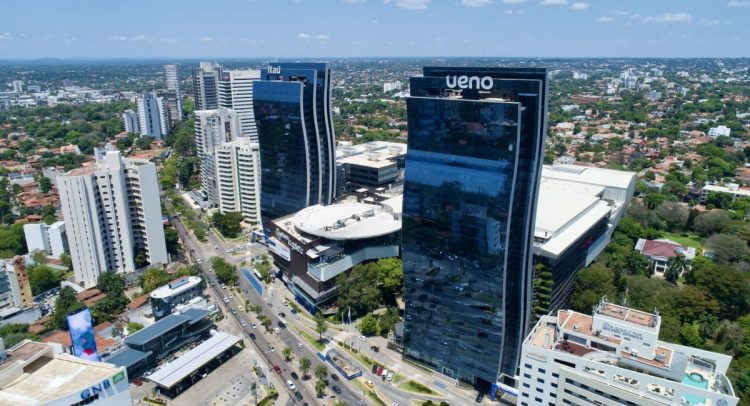
Asunción is now #2 in the world for consistent multi-year digital-nomad growth. For investors, that ranking matters less as a lifestyle headline and more as another sign that Paraguay is attracting people, capital and businesses at the same time that the market is still early enough to offer meaningful room for growth.
Why investors should care
International demand is accelerating into an economy that is already growing quickly. New residents need housing, banking, healthcare, education, restaurants, transport, professional services and places to deploy capital. For investors, the ranking is useful because it points to demand arriving before many parts of the market have fully matured.
In this article
- Asunción is #2 for consistent digital-nomad growth
- The ranking sits inside a much bigger international migration trend
- That demand is arriving into a strong and increasingly credible economy
- Paraguay and Dubai solve different parts of the same problem
- The low-tax case starts with Paraguay's territorial system
- Tax efficiency becomes more useful when it comes with mobility
- Investment and residency can reinforce each other
- The property market is evolving across different parts of the market
- Paraguay already has the foundations. The opportunity is in how much more can be built.
- The ranking is a signal. The opportunity is getting positioned before the market matures.
Asunción is #2 for consistent digital-nomad growth
The most useful part of the ranking is not a one-year spike. It is the consistency. Asunción has recorded strong positive growth across several consecutive years, placing it between Da Nang and Almaty in the current multi-year comparison.
| Rank | Destination | 2023 | 2024 | 2025 | 2026 YTD | Cumulative growth |
|---|---|---|---|---|---|---|
| 1 | Da Nang, Vietnam | +135% | +40% | +48% | +51% | +221% |
| 2 | Asunción, Paraguay | +66% | +30% | +58% | +39% | +173% |
| 3 | Almaty, Kazakhstan | +39% | +4% | +32% | +23% | +115% |
The wider growth list also puts Asunción in the same global conversation as emerging hubs such as Uluwatu, Hoi An, Da Nang, Shenzhen and Beijing, alongside established cities such as Seoul, Stockholm and Istanbul. The point is not the name of the ranking. It is that Asunción is now competing globally for the same mobile professionals, founders and investors.
That is useful as a signal, but the investment case becomes much stronger when the remote-work data is placed beside Paraguay's official migration numbers.
The ranking sits inside a much bigger international migration trend
Paraguay recorded a 63% increase in residence applications in 2025 compared with 2024. The momentum accelerated again in the first half of 2026, when applications rose another 62% year on year and reached the highest first-half volume recorded by the migration authority.
Those arrivals are not one type of person. They include regional migrants, entrepreneurs, employees, investors, retirees, families and remote professionals. That matters because this is not one temporary lifestyle trend. It is a broader internationalisation of demand.
Asunción is also becoming easier to choose as a genuine base. The city combines comparatively low living costs with fibre internet, coworking, restaurants, modern apartments and growing international communities concentrated around neighbourhoods such as Villa Morra and Recoleta. Local estimates put a comfortable monthly budget for one person at roughly US$1,300 to US$1,400.
That demand feeds directly into the economy. Longer-stay professionals rent homes, use private healthcare, open bank accounts, start companies, hire accountants, spend in restaurants, use coworking and professional services, and often begin looking for investments once Paraguay becomes part of their life.
That demand is arriving into a strong and increasingly credible economy
The migration story is happening alongside one of the stronger macroeconomic periods in Paraguay's recent history. Real GDP expanded 6.6% in 2025. For 2026, the IMF expects growth of about 4.4%, while the Central Bank of Paraguay projects 4.5%.
Paraguay also entered the investment-grade club in 2024, and Moody's reaffirmed its Baa3 investment-grade rating with a stable outlook in July 2026. The agency pointed to solid economic growth, relatively low and stable public debt, a credible monetary framework and price stability.
For investors, the combination is compelling: a country attracting more people while maintaining growth, macro stability and an investment-grade sovereign profile.
That combination also explains why Paraguay is increasingly entering conversations that were once dominated by places such as Dubai. The comparison is not that the two markets are the same. It is that both can solve important problems for internationally mobile investors, but they do so from very different stages of development.
Paraguay and Dubai solve different parts of the same problem
Dubai / UAE
- Mature international hub: deep infrastructure, global aviation connectivity and a large professional-services ecosystem.
- Tax: no individual income tax under the UAE federal system.
- Property and business: highly developed markets with deep liquidity and international buyer recognition.
- Tradeoff: the maturity that makes Dubai easy to use also means higher entry costs and intense competition across many sectors.
Paraguay
- Earlier growth stage: strong local demand with significant room for new property, services and businesses to expand.
- Tax: territorial principles can leave qualifying foreign-source income outside Paraguayan taxation, while local rates remain low.
- Tax-residency mobility: Paraguay's fiscal-residency rules do not impose a fixed annual minimum-stay requirement once permanent migratory residency is established.
- Opportunity: lower entry points and more areas where investors and operators can participate in what is still being built.
The goals are different. Dubai is a mature global hub with world-class infrastructure and much higher entry costs. Paraguay offers something different: lower barriers to entry, tax-residency mobility with no fixed annual minimum-stay rule, and the chance to participate earlier in a market that is still expanding. For internationally mobile investors, that freedom matters because the tax strategy does not have to dictate where they spend most of the year.
The low-tax case starts with Paraguay's territorial system
Paraguay's tax system is fundamentally source based. In practical terms, the key question is not simply where a person is resident, but whether the income is considered Paraguayan-source income.
That is particularly attractive for investors with international assets. Under Paraguay's territorial system, qualifying foreign-source dividends, investment income and capital gains can fall outside Paraguayan income tax because the country taxes Paraguayan-source income rather than worldwide income. The source rules still matter, especially where an asset or right is economically tied to Paraguay, but the starting point is very different from a worldwide-tax system.
Even when Paraguayan tax applies, the rates remain low. Business income under the general IRE regime is taxed at 10%, which is only one percentage point above the UAE's 9% federal corporate-tax rate on taxable income above AED 375,000. Personal-service IRP uses progressive rates of 8%, 9% and 10%.
The capital side is where the territorial system becomes especially powerful. Paraguay does not impose a worldwide capital-gains tax. Qualifying gains on foreign assets can fall outside Paraguayan IRP, and qualifying dividends from foreign companies can also fall outside Paraguayan-source taxation. Paraguayan-source capital income is generally taxed at 8%. Source rules still matter where an asset or right is economically tied to Paraguay, but for genuinely foreign-source investments the advantage is substantial.
The result is a system that can produce very low and, for qualifying foreign-source income and gains, potentially 0% Paraguayan tax, while keeping domestic tax rates competitive when local tax does apply.
Paraguay gives internationally mobile investors a legitimate path to low taxation without requiring the entire financial life to be concentrated inside one high-cost jurisdiction.
Tax efficiency becomes more useful when it comes with mobility
For tax residency, Paraguay is unusually flexible. DNIT's own guidance ties an individual's fiscal-resident status to holding permanent migratory residency. There is no fixed annual minimum number of days written into that fiscal-residency definition.
The tax-residency certificate process does review your migration movements for the relevant year, so the setup still needs to be real and properly documented. But Paraguay is not built around the common model where you must spend 183 days in the country every year just to keep the tax-residency position.
Permanent residency is flexible too. You do not need to live in Paraguay for most of the year to keep it. Under the migration law, the key limit is generally an absence of more than three consecutive years without justification.
Paraguay has also updated its residency framework to recognise modern economic profiles, including remote workers. For internationally mobile founders and investors, the combination of tax residency, banking, low taxation and mobility is one of the strongest parts of the proposition.
Investment and residency can reinforce each other
Strip away the residency and tax advantages and the numbers already make Paraguay a compelling investment story for foreign capital. Real GDP grew 6.6% in 2025, 2026 growth is tracking around 4.4% to 4.5%, the sovereign carries an investment-grade rating, and international residency demand is at record levels. For investors looking for growth, stability and an earlier-stage market, that combination is difficult to ignore.
You do not need to move to Paraguay to participate in that growth. Foreign investors can own property, invest in operating businesses and position capital in the country while living elsewhere.
But the case becomes even more interesting for people who are already establishing residency, restructuring internationally or planning to spend meaningful time here. If Paraguay is becoming part of your tax, banking or lifestyle strategy, it is natural to ask whether some of your capital should also participate in the same growth.
That does not mean buying whatever is available. It means looking at the country as a complete opportunity: where population growth is creating demand, which sectors are still undersupplied, which projects have the right entry point and which structures let the investment work cleanly alongside your wider international setup.
The property market is evolving across different parts of the market
Asunción is not becoming one luxury market. Its property sector is broadening. Local buyers still drive large parts of the market, accessible residential projects continue to expand, and at the same time new premium and internationally branded products are appearing for buyers who want a different level of design, amenities and service.
That diversity is exactly what a growing city should produce. More local wealth, more businesses and more international residents create demand at different price points rather than pushing the entire market in one direction.

One example is Royale Design by Pininfarina, a new Grupo Petra project in Barrio Mariscal. It combines Pininfarina's international design language with references to Paraguayan architecture and ñandutí, and it arrives at exactly the moment when more international buyers are beginning to discover Asunción.
Read the full analysis: Pininfarina comes to Paraguay and what Royale means for Asunción real estate
Paraguay already has the foundations. The opportunity is in how much more can be built.
Asunción already has modern residential towers, shopping centres, private healthcare, strong restaurants, coworking, private education, local and international banks, an active development sector and a growing professional-services ecosystem.
The opportunity is not that these things do not exist. It is that demand is growing faster than many parts of the market have historically needed to evolve. That leaves room for better housing formats, property management, hospitality, finance, healthcare, education, mobility, logistics, technology and professional services aimed at both Paraguayans and the expanding international community.
For investors, that is where the opportunity becomes interesting. The best openings are appearing where fast-growing demand meets limited supply, weak execution or a category that is only beginning to professionalise. Those gaps tend to be much harder to access once a market is already mature.
The ranking is a signal. The opportunity is getting positioned before the market matures.
Asunción being #2 makes a strong headline, but rankings can move. The deeper story is more durable: foreign residency demand is at record levels, the economy continues to expand, Paraguay now carries investment-grade status, the tax system remains internationally competitive and the city is adding new property and business products for a broader population.
The numbers do not tell an investor exactly what to buy. They do tell us when to pay attention. Paraguay is still early enough that access, local knowledge and entry price can matter enormously. This is the stage when serious investors should be building relationships, comparing opportunities and deciding where they want exposure before the story becomes obvious to everyone else.
Sources & primary documents
Primary sources are preferred. Each document below can be inspected without leaving this page.
- Nomads.com: Fastest Growing Digital Nomad Hotspots Live member check-in dataset used for the consistent multi-year growth ranking. Checked 25 September 2026. View source
- Dirección Nacional de Migraciones: 2025 residency growth Official year-on-year residence-application and approval growth. View source
- Dirección Nacional de Migraciones: first-half 2026 residency growth Official first-half 2026 year-on-year residence-application growth. View source
- IMF: 2026 Article IV Consultation with Paraguay Macroeconomic performance, 2025 growth, 2026 outlook and banking-sector context. View source
- Banco Central del Paraguay: Monetary Policy Report, June 2026 Official 2026 GDP-growth and inflation projections. View source
- Ministerio de Economía y Finanzas: Moody's investment-grade rating Moody's Baa3 investment-grade rating with stable outlook, reaffirmed in July 2026. View source
- DNIT: territorial-source treatment of foreign income DNIT explanation of Paraguay's territorial-source principle and source treatment of dividends. View source
- DNIT: Personal Income Tax Official IRP scope and rates for Paraguayan-source personal and capital income. View source
- DNIT: Business Income Tax Official IRE scope and 10% general rate. View source
- DNIT: Dividend and Profit Tax Official IDU rates, including 8% for resident recipients of Paraguayan-company distributions. View source
- DNIT: who is considered fiscally resident Official DNIT guidance stating that an individual is considered fiscally resident when they hold permanent residency under Paraguay's migration law. View source
- DNIT: Fiscal Residence Certificate procedure Official certificate procedure, including the requirement to provide migration-movement records for the relevant fiscal period. View source
- UAE Government: Federal Corporate Tax Official UAE corporate-tax rates: 0% up to AED 375,000 of taxable income and 9% above that threshold. View source
- Dubai GDRFA: Virtual Work Residence Official Dubai virtual-work residence information used for the comparison. View source
- The Asunción Times: Asunción digital-nomad growth Local reporting on affordability, remote-work infrastructure and the growing international community in Asunción. View source
Update history
- September 25, 2026Rewritten to strengthen the investment narrative, update the featured image, simplify the ranking methodology note and reframe the tax section around Paraguay's territorial system.
Last verified against official sources: September 25, 2026